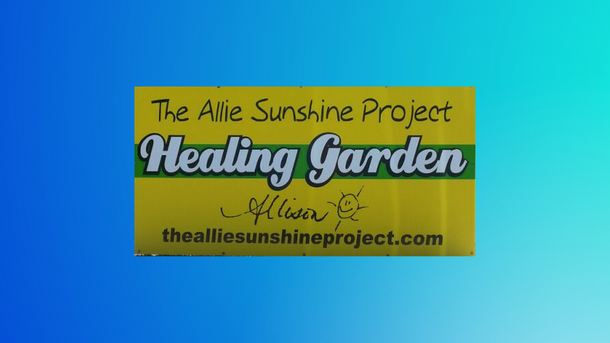
About the Allie Sunshine Project
The Allie Sunshine Project is a not-for-profit organization, and its core purpose is to ignite learning and wellness. They create events and initiatives within Windsor-Essex County that provide a nurturing and educational experience for the body, mind, and spirit, within the self and with others. Their organization is energized by the living legacies of every one of our Rays of Sunshine, who are dedicated volunteers. They make their work possible and embody the spirit of our organization’s core values as wellness explorers. For more information: https://thealliesunshineproject.com/
Connect with Jeremy and Lynn: Email | Instagram | Facebook
Listen Now
Listen to the episode now on Apple Podcasts, Spotify, or on your favourite podcast platform.
Resources Mentioned
Habitat for Humanity Windsor-Essex
How to Build a Healing Garden – PennState Extension
SelfDesign Learning Foundation
Brent Cameron’s “WonderTree” and Virtual High
Empty Your Backpack by Sam Demma
The Transcript
**Please note that all of our transcriptions come from rev.com and are 80% accurate. We’re grateful for the robots that make this possible and realize that it’s not a perfect process.
Sam Demma (00:00):
Welcome back to another episode of the High Performing Educator Podcast. This is your host and youth speaker, Sam Demma. Today’s interview is a very special one because it is the first time, the first time ever that I’m interviewing a mom and a son on the podcast at the same time. Jeremy Hayes and Lynn Hayes are two of the amazing humans, two of the visionaries behind the Allie Sunshine Project. The Allie Sunshine Project is inspired by educator and wellness pioneer Allison Hayes, known as Allie Sunshine, for her unique ability to share her light and positive energy with everyone she met while she was still on this planet. The Allie Sunshine Project is a not-for-profit organization, and their core purpose is to ignite learning and wellness. They do this by creating events and initiatives within the Windsor Essex County that provide a nurturing and educational experience for the body, mind, and spirit within the self, and with others.
Sam Demma (01:09):
Their goal, their mission statement, is to inspire a network of wellness explorers through creating and participating in projects in the community that nurture self-healing and capture learning opportunities again, for the body, mind, and spirit. They do this through nature, shared wisdom, and living legacies. Three things which we’ll talk about today. And through those three things, they empower humanity to choose personal wellness. I was so inspired after my conversation with Jeremy and Lynn that I put on my boots and I went for a hike through the forest. I hope and know that you will have a similar experience after listening to this amazing conversation. I will see you on the other side. Put on some headphones and enjoy. Welcome back to another episode of the High Performing Educator. Today we have two very special guests that were recommended by a past guest; Anita Bondi. Their names are Jeremy Hayes and Lynn Hayes. Jeremy, Lynn, please introduce yourselves and share a little bit about the work that you do with your amazing organization.
Jeremy Hayes (02:18):
Awesome. Thank you so much, Sam. Thanks for having us. And thanks to Anita for recognizing us as educators. We’re not traditional educators currently, but yeah, we’re definitely working in education and it’s great to be recognized. My name’s Jeremy Hayes and I’m the visionary Director of the Allie Sunshine Project, and by day I’m a salesperson in the greenhouse industry out in Lemington. So to introduce myself and how I got into education, I, after high school, I was working as a machinery operator and not really feeling it, and I was facing winter layoffs and decided to go back to school, and I went to St.Clair College and really caught the bug. I, as, as soon as I sat in those classes where, you know, I was able to choose my own major, I, I just felt a vibe and knew that I wanted to teach at the post-secondary level or some, in some applied way in the future.
Jeremy Hayes (03:30):
and so fast forward from 1999 to 2013, and my great-aunt who is a enthusiastic educator and lifelong learner, she she had always been coaching me, kind of prodding me, grooming me for something something that she saw in me. And so she had recently started on the board of the Self Design Graduate Institute, which was founded based on the principles of Brent Cameron’s Wonder Tree and Virtual High, which were learner directed K to eight and nine to 12 bricks and mortar schools that he founded in Vancouver, British Columbia. And they realized that those learners, after finishing their undergrad, wouldn’t have anywhere to go that was learner directed. So they said, let’s set up a, a graduate institute that is completely learner directed. And so she said, Jeremy, I think you’d be perfect for this. And that was in 2013 at the time.
Jeremy Hayes (04:41):
so I had completed a college diploma and a, and an undergrad, so it was kind of perfect timing for me. I was, I was married Toran at the time, who was a educator. And so we looked at doing that doing that together mm-hmm. <affirmative>. but she you know, she had been living really vibrantly with an ongoing illness for a number of years, for almost a decade at that point. but it progressed. And in 2015, she passed away and almost immediately after she passed the family flanged up, and her brother said, you know, what are we gonna do? are we gonna collect donations at the funeral and give them to a charity? Or he, he suggested that we actually start an organization. And so, at that, at that time, in that moment the Ali Sunshine Project was born and it was born largely because we had been the family and the friends had been so impacted by Allison and her spirit and energy that she, she brought to every situation that she was in and the way that she educated in the classroom and beyond in all of her relationships.
Jeremy Hayes (06:06):
She really had a vested interest in, in everybody that she connected with. And it was as her husband, I got to see her do that over and over and over again. And she just really believed in, people believed in their goals, and she would, you know, ask you what, what your dreams were, and she’d follow up with you. And so that was where the Ali Sunshine Project was born. And in the days and months following, as we were trying to figure out what to do I decided to enroll in the Self Design Graduate Institute and dedicate my Masters of Arts in Education to exploring how we built the Sunshine Project and what that meant. And so it wasn’t long after that I got role in my great Aunt Flore and I cooked up a plan to rope my mom into the mix <laugh>. Cause she, being, she being a retired grade school teacher, was perfect for some continuing education. And I knew that she would love it. And so I put the full court press on and had aunt Flore worked the back channels. And I’ll hand it, I’ll hand it over to Lynn to, to talk a little bit about her experience.
Lynn Hayes (07:25):
Hi. Well, teaching for me is a lifelong calling. I loved school as a child, and role played my favorite teachers at every opportunity I had. Right out of high school I went to teachers college and became an elementary school teacher, and worked in that field for 40 years. During that time, I taught all ages from kindergarten through to grade seven, and were also worked in adult education through our local University, teaching a program called Education Through Music, which really explored how children learn in a dynamic, vibrant way. In retirement, I continue this journey of learning and teaching in all my relationships, and especially as grandmother of my four grandsons. And in my role, my current role as the education team lead of the Allie Sunshine Project. When Jeremy suggested I join him in this Self Design Graduate Institute program, it was the perfect opportunity to fulfill my goal of completing a master’s degree, and to explore what would be next in my learning journey. The research question that motivated our study was how have we inspired a community of explorers to choose wellness with nature, emergent learning, shared wisdom, and living legacy. Today, we will share with you some highlights of how we answered this and continue how we continue to explore the answers to our questions along the way. I think I could go on, I don’t know what we want. I can do talk about learning what a learning community is, or Jeremy,
Sam Demma (08:58):
That’s, that’s a perfect introduction to yourself and your background, and I appreciate you sharing that. one, you mentioned four things there that kind of peak my interests. can you both speak maybe a little bit on the importance of nature and how that has become one of the big pillars of your research question? And maybe we can go through all four of them very, very briefly.
Jeremy Hayes (09:22):
Perfect. Yeah, for sure. I’ll, I’ll I’ll jump in and, and tackle that one. nature was something that we were personally, personally I was always kind of interested in, but never never had a a really close relationship with nature. And so it was something that I wanted to develop, you know, a little bit more personally. And I had an interest in agriculture. I was interested in agriculture from an early age. And so, but I, I was coming at nature from more of a scientific understanding rather than more of a spiritual connection. And so that was something that I was trying to develop for myself at the same time as sharing that passion with the, the rest of the team in the Ali Sunshine Project and the people, our, you know, our, our members and anybody that we engaged with patrons that came to our events or participated in our projects.
Jeremy Hayes (10:27):
One of our first one of our first events that we put together was called The Planting Wellness. we, we initially called it the, the plant giveaway, and be that I had some connections in Lemington. we rounded up some some seeds and got some plants growing. And we were yeah, just set up an event kind of like a nursery style with tomatoes, carrots, peppers, everything under the sun. different stuff that we had never seen or grown before. to give people an experience that they could take home with them and and, and start that relationship with nature on their own to, you know, just break down those walls of our, our Western perception in nature is so, it’s so, so sterile, and it’s so mechanistic, and it’s black and white, and we really objectify nature the way that our language you know, names all of the, the different animals, like they’re a thing.
Jeremy Hayes (11:37):
where what we’ve come to learn is that some, some other cultures, they, they don’t objectify. those they treat them as sentient beings, and they, they, they treat them as an equal and opposite other the tree has a life. the, the plant is, is alive and is a living, being a creature, not a thing. and so we’ve, we’ve come to understand some of the barriers to developing that relationship. And then along that path, we’re we’re doing through our events and our projects we’re looking to break down those barriers. And one of the experiences that really punctuated that for me was you know, this was largely a, a grieving journey, was a grief project. Not that it’s come to be so much more than that. But in the beginning, we were you know, building a community and largely sharing in the grief of missing Allison in the garden.
Jeremy Hayes (12:47):
you know, as the, as the leader of the organization we were planting a vegetable garden and had been doing this for a number of years. When I just realized there was a lot of stress, the plants would all come in, we’d distribute them at the event, and then we would try and plant, you know, as many of ’em as we could before they died. And whatever didn’t make it, we’d throw on the compost pile. And that particular spring our kale plants were having a rough go. And they were malnourished and eaten the bits by the, by by some bugs. And so we had to take the kale plants outta the garden and throw ’em on the compost heap. And I, I really took that on the chin because I felt like it was a bit of my disorganization that maybe planted a month too late and didn’t water ’em on time.
Jeremy Hayes (13:40):
so I was a little saddened by that. But then I took ’em over to the compost pile, and their growing wonderfully fruitfully was kale plant that we had thrown away a month earlier and not even looked at and didn’t water. It didn’t fertilize, it didn’t do anything to it, but nature had shown us the way that nature provides everything that we need if we’re if the conditions are perfect. And for me, it was such a metaphor that I don’t need to be scared of nature, nature’s not the boogeyman. Everything that we need is there, not just for our sustenance, but for our, for our spiritual growth and for our inspiration. there are so many lessons that were there for me in that compost pile because it’s, it’s ironic that it’s a pile of dead bodies. It’s a pile of dead plants, Sam, and it’s being decomposed actively by bugs and microbes that are transforming that death into new life, and providing the nutrients that were those old bodies of those plants in an available form to that new kale plant.
Jeremy Hayes (14:58):
And that was all happening and has been happening for millennia on this planet without me and my watering can, and all my wishes and hopes and dreams. So I’ve just, I’ve really come to, it was like a, a breakthrough moment for me to be able to relax into my relationship with nature and trust that I am a part of nature. And that you know, this life is so much, so much of this life. The Art of living is about knowing what to conserve and what to release to the compost heap. And so I was able to really process a lot of my grief in that moment. And nature helped me with that. And I was also able to gain a lot of insights about just, you know, loosening up on how hard I press to control things in the garden and in my life in general, that everything’s gonna, everything’s gonna work out.
Sam Demma (16:02):
Wow. Who knew a ka plant in the compost bin could bring so much thoughts. <laugh>, it’s such a cool reflection, and I’m so grateful that you shared that. Lynn, what about yourself with, with, with the connection to nature? Has that been something that you’ve had your whole life, or did you find it
Lynn Hayes (16:20):
Recently? Well, it, it is something I had as a child. I think children do that naturally. Yeah. But over the years, it got pushed aside. And, you know, I wasn’t outside that much. My job was indoors. You come home, you work in your house. and part of our studies, we took a eco psychology course with Hillary Layton, and that experience brought us to a deeper connection with nature and experience ourselves. one of her requirements, part of the course was to do site sitting. We had to choose a spot in nature and sit there for 30 minutes a day, every day, no matter what the weather for 30 days in a row, and just be there and see what happens. So for me, this was when the importance of being connected to nature moved from my head to my heart. I chose a spot on the bank of a creek that’s in my backyard, and I had lived there for 25 years, but had probably never done this. Never sat. So I sat on the ground with my back against the trunk of a tree, and the tree that beck and me come sit here. And it was so powerful. I was overcome with a deep sadness as all that surrounded me in that space, whispered to my soul, welcome back. We missed you.
Sam Demma (17:41):
Mm, there’s a continue.
Lynn Hayes (17:46):
so that was just where it, it I understood it at a deep level that it wasn’t, we, I didn’t feel it was lip surface. It was a deep conviction to the power, the healing power of nature, nature, what it has to teach us. And now this awareness allowed us to be different in how we were leading our organization.
Sam Demma (18:10):
That’s awesome. There’s a really beautiful, yeah, there’s a, a really great book called The Seasons by a man named Jim Roan, and he talks about how the changing of the seasons is such a big analogy for life as well. And what you plant in the spring or in the, in the fall, you harvest in the spring. And anyway, there’s just so many cool little things that you can learn from nature, and both of you are really highlighting that right now we back onto a little ravine. And this conversation has inspired me to put my boots on afterwards and go for a walk, because I used to do it all the time, <laugh>. And I, I hope it’s inspiring the listeners as well, because for me, whenever I’d walk through nature, my nostrils would clear up. And I, I’m not, I don’t have allergies or anything, but the moment I get in there and start walking, it’s like, my body just feels alive.
Sam Demma (19:04):
so I, yeah, I appreciate this reminder, and I think so many educators will also, the last point you raised was, and you, you said it, living, living legacy. and it immediately brought to mind a friend of mine named Cody Sheen, who wrote a book called Everyday Legacy. He worked in the funeral industry, and for years would listen to people talk about the regrets at the table after their loved ones had passed away, and they would write their eulogies and be, their eulogies would be read. And his whole philosophy after hearing this so many times was, why do we wait to create a legacy instead of living it right now? And that’s what his book is all about. And when you said Living your legacy, I immediately thought of that, but I’m curious to know what, what drove that section to be a part of your research question and how does it relate to the whole project?
Jeremy Hayes (20:00):
Yeah, Sam, thanks for asking. And I think we’re on the same wave there with Cody. I was always of the same frame of mind that it’s interesting to see how we reflect on the lives of people after they’re gone, rather than celebrate them while they’re here. And, you know, this was something that I witnessed often doing. she had yeah, she had a real gift in that way to be able to celebrate and bring her awareness to her own life as she lived it, and and live in a real conscious way. And, you know, I, I, I knew that all along, but then after she passed away, I read some of her journals and I’m like, man, this, this woman was really reflecting consciously on her day to day and and crafting her, her legacy as it unfolded.
Jeremy Hayes (21:12):
so I, I didn’t realize at the time but well, I guess I intuitively I realized it, but it, it really sunk in once I had a chance to, to see how deeply she was reflecting. And so we, we took that we took that tip from, from Ally and wanted to make that central to the central theme in our organization and the education that we bring to our, to our members, and to the people we engage with that you have legacy that you are living currently mm-hmm. <affirmative>. And given the chance to bring your awareness to that and shape it it can be very powerful. And so we’ve also twisted that a little bit because you know, keeping in line with the, the funment of our organization, we we are a wellness organization, and so we are encouraging people to live their wellness legacy. Nice. And so we’ve, we’ve sprinkled that wellness component in there to say, you know, you know, you can develop a self-awareness that encourages yourself to have greater self worth and to continue to do that work in developing your legacy and living it on the daily.
Sam Demma (22:41):
Nice. Love that. Lynn, any additional thoughts or you think, Jim?
Lynn Hayes (22:46):
I actually, I think we, we coined a phrase called the Ripple effect because there were so many people that had been touched by Allison’s life, and it, it helped us to realize we all have a ripple effect. It’s impossible to throw a stone in a pond without seeing a ripple. And we’re, we’re a stone dropped into our spot on Earth, and just by being here, we, we are creating a legacy, and we have a ripple effect. And yeah. So
Sam Demma (23:16):
I love that. That’s such a cool idea. And sometimes, sometimes you, you know, you actually don’t see who your ripple is impacting, and it gets a little overwhelming because sometimes you might wonder, well, are the actions I’m taking right now making a difference? I, I, I think about this one time I was sitting at our family cottage on the dock, and it was pitch black outside. It was nighttime. You could see the stars and the moon, and you could hear in the distance a boat just like zooming across the lake, and the all you could hear was the boat faintly, but nothing else. And everything else was super calm. And like five minutes later, all these waves start to hit the shore. And it was just this really cool realization to me that this boat has no idea. His waves are hitting my shore while I’m sitting on the edge of my dock 10 minutes after his boat’s gone.
Sam Demma (24:15):
And it’s a cool reflection to think about how our actions every day are affecting people that we may never meet, we may never touch. And it sounds so clear that Allison did that, and I love that that’s a really central theme of your work and your organization. Jeremy, you mentioned that you slightly modified it for the organization, the phrase living your everyday wellness legacy. What does it mean to live with wellness? Or like, how do, how do we ensure we’re taking care of our wellness? are there things that you kind of recommend people do or explore? I’m just curious.
Jeremy Hayes (24:54):
Yeah, I’m gonna back that up a little bit. I appreciate the question. And it actually sparks some work that we’ve done which is, you know, really central to my passion of organizational development. And so I’ll get, I’ll get your, I’ll get your question about how we came to how, how we came to that term wellness. But one of the first courses that Mom and I co-created in exploring the Masters together was a course in conscious business. And we had been operating for almost two years at that point. And we had a mission statement right away, but we really didn’t have the essence of the organization distilled. And so we reached out to so Renee Poindexter, who is an author and educator, and she is just a, a, a dynamic educator.
Jeremy Hayes (26:00):
And so she was our faculty advisor in that exploration and conscious business. And so we, as for that course, we designed and implemented three workshop style meetings with our, with our leadership team to do that work of closely observing what we had, the projects and the events that we had undertaken to date, and how we had shown up in in doing that work to distill who we were as an organization, what it was that we were really focused on doing, and where we would end up when it all came to fruition. And it was some very careful work that that we, I mean, we had a lot of fun with it. And we put our, we put our team through some real fun paces. We did some great team building exercises along the way, and we had a lot of laughs.
Jeremy Hayes (27:01):
We had some tears and in the end, we got real clear on who we are as an organization. And we took our pretty wordy beautiful, but pretty wordy mission statement and distilled it into our core purpose to ignite learning and wellness. And to get to your question, like we debated on whether that word should be wellness or should it be wellbeing or should it be health? And we looked at all those definitions. We looked at different definitions for each word, and we put it to consensus. because in that, in that same in that same timeframe, we were developing how we communicate as well as getting clear on, on who we’re as an organization. And so we chose that word wellness very specifically because of the of the underpinning of that word to be well, and to promote greater wellness, and so that we interpret to be a wellness of body, mind, and spirit.
Jeremy Hayes (28:12):
Mm-hmm. <affirmative>. And so in order to, you know, to answer your question to, to move down that path you know, we are I think that the biggest component of wellness is that self-awareness and self-worth. And when you can bring your awareness to yourself and your choices and your habits, and you can pay careful attention to how you feel in relation to your habits and your choices, and what makes you feel good and what doesn’t make you feel good. When do you have more, more energy? When do you feel like your mind is sharp? When do you feel like your head and your heart are connected? you know, what relationships in your life give you energy and what relationships drain you? Just that simple just that simple act of caring for yourself enough to be self-aware and to encourage yourself to make choices that lead to you increasing your wellness is is the work that we’re doing in this organization.
Jeremy Hayes (29:27):
that’s to answer your question, but I, I’m on a roll here because that work that we did we didn’t just distill our core purpose to ignite learning and wellness. we took that one step further. And in one of our fi in our, in our third workshop, we we bought a bunch of crazy big sunglasses, and we had our whole leadership team put on, put on the big, and we called them Glasses of Possibilities, <laugh>. one of the, one of the things that our team was having a challenge with was because we weren’t, we, we weren’t skilled leaders none of us had previous board of director’s experience mm-hmm. <affirmative> this was, this was more than we had bargained for. And for a lot of us we were bringing a lot of fears into this conversation.
Jeremy Hayes (30:21):
And so with Renee’s guidance, mom and I put this exercise together and we prefaced it with, you know, we need to really put our individual fears and hesitations to the side, and we need to ground ourselves as you know, what is best for this organization, because we may not be here tomorrow, and we need to leave this organization as a, as a gift for, for those who come in the future to lead it. And so we had our team put under glass of possibility and with eyes to the future of 30 years and beyond write down what they felt we could accomplish if everything that we were doing and had planned came to fruition. And so that that led to us distilling a vision statement that through nature, shared wisdom and living legacies, we empower humanity to choose personal wellness.
Sam Demma (31:26):
Mm.
Sam Demma (31:27):
I love it. We, we talked about the living legacy. We talked about the connection to nature. We didn’t touch on the shared wisdom piece, but before we do I loved that you put on these massive glasses during your meeting. <laugh>, I, there’s something about oversized objects I <laugh> like, it’s just, it catches the attention and it becomes like a fun thing. There’s I have a new speech that I do for students in schools, and it’s called Empty Your Backpack. And it’s a challenge to have students reflect on the beliefs they’re caring about themselves, their potential, what’s possible for them, where some of those beliefs came from. And if it’s time to let go, and I have a giant four foot red backpack that’s like the backpack of beliefs. So I resonate with like the visual and calling it the glasses of possibility, because you see through them and there’s so many bright things in the future. And I just thought that was really cool. So I wanted to make a, a note to mention that. tell me a little bit about Shared wisdom. how do we tap into that and, and what is it exactly?
Lynn Hayes (32:39):
You
Jeremy Hayes (32:40):
Jump in on that, mom? Because I remember when you didn’t even think you had wisdom <laugh>.
Lynn Hayes (32:44):
That’s, that’s right. Early on in our, our course I had submitted this reflection and the, the mentor who read it, his comments were, oh, lots of wisdom. Your wisdom is duh, da, da da. And I, I came to realize that, yeah, I’ve lived 60 some years. I do have, I’ve learned some stuff and found my voice to be able to share it. So that was, you know, when you are aware of it yourself, then you know how to lead others to find it and or to be aware of it also. So and it, it just is woven through by our studies and what we were doing, and they just came together in this beautiful affirmation of, of what we had to offer and that we were doing important work here. a couple of the things that came out of our conscious business was a quote from Fred Kaufman, that, right, right.
Lynn Hayes (33:41):
Leadership is how being rather than doing is the ultimate source of excellence. Mm. And so we, we let go of that. Like, oh, did we do enough? Did we accomplish enough the checklist thing to how are we being Mm, how are we being? And we came to understand more duly what we mean by a learning community. in the words of Margaret Mead, never doubt that a small group of thoughtful committed citizens can change the world. Indeed, it’s the only thing that ever has. And in developing how we would be together, we decided to do a all our decisions by consensus. I see. And this consensus decision process is powerful. And to have new people who joined us to understand the benefit of consensus, rather than taking a vote in a vote, there’s always some losers who didn’t get heard. Because the majority, it makes the decision.
Lynn Hayes (34:39):
So we believe that we are truly stronger together, and we’ll not process progress over the learning that takes place during the process of coming to deci consensus decisions. It’s really our forum to draw out the wisdom of each person around that table. So cool, because it’s like, there’s no, being silent at a meeting leaves a big gap. It it, it disconnects the group. And so consensus decision, every voice is heard. It’s a requirement of consensus decision to say where you’re at with it and to understand, I’ve been present where the whole decision switched by one voice saying, but I’m not sure I see this. I wonder this. And it’s comes to a better spot. And we’ve operated on if you can live with it, if it makes sense to you, it goes on. If not, the decision isn’t made that day. That’s, that’s wisdom in action to like, let’s wait.
Lynn Hayes (35:37):
Let’s gather more, let’s grow in this. Let’s sit with it for a while. and in understanding the depth of what we mean by learning in community and allowing that emergent learning to happen, like emergent learning and doing it together is really, really brings out that, that wisdom. we followed the work of Margaret Wheatley who asked a really important question, how do we persevere in creating the changes we want to see in the world? And her, she offered a couple of guideposts, and the one guidepost was, learn from what you do after everything you do. Ask yourself, what did we learn? What worked, what didn’t work? Live life as a sci scientist, learning from the data that evolves. And we realized that is really what we had been doing. We cause we, we had freed ourselves to not have to have the answers, but just to be open hearted to asking the questions that were arising and doing it together just is a form for sharing your wisdom.
Sam Demma (36:45):
And I think even if you’re not a part of a organization that’s making consensus decisions and being able to put that reflection instantly into practice in a business sense, the idea you mentioned earlier, Jeremy, of journaling, like there’s one way to start collecting your wisdom or reflecting on your own experiences, even if you don’t have a board of directors. I think every educator could benefit from keeping a journal and writing down their reflections. I think about how cool it would’ve been if my grandfather kept a journal and, you know, was able to hand me 50 books and say, this is my life. If you’re interested, <laugh>. you know, not, I mean, that’s selfishly from my curiosity, but how cool it would’ve been for himself as well to just constantly reflect and tap into the wisdom of his experiences and those around him. this has been such a insightful conversation from a bird’s eye view, what are the ways in which the Ali Sun, the Ali Sunshine Project helps to ignite wellness? like is it event, is it events mainly fundraisers? Like what are the things that you guys do? Do you run programs? Like just give people an idea of the couple different things that you do?
Jeremy Hayes (38:10):
For sure. projects and events are the ones, everything that we do. we’ve got our central project is healing Garden, a one acre space on West Pike Creek Road in Lake Shore that we’ve converted into a healing garden under the guidance of Dan Binet at Windsor Essex Habitat Naturalization Network. Yes. he led a course in Build A Healing Gardens, and that’s been our home base, our outdoor classroom, our community hub. and we continue to gather there on Saturday mornings. and we connect as a, as a community. And we garden, we grow flowers, we grow plant we grow veggie plants. The veggie plants are donated to the Windsor Youth Center. and yeah, we’re market gardening, selling the, selling the flowers, and just really enjoying the space. So we’ve got a whole bunch of different garden installs and we’ve been exploring there together for years.
Jeremy Hayes (39:18):
We’re putting in an outdoor kitchen, so that’s a big one for us. Lots of fun. Nice. and then we have a, a long list of events that we host in the Healing Garden and throughout the community, we have a blood drive coming up November 26th. so if you’re interested in donating blood look us up. You can email us through the website, the ali sunshine project.com. And we have an education team, which Lin leads, and they put together a series of wellness events that have been hosted in the Healing Garden. So more to come on that front. we have a a school outreach team and they install Buddy benches at local schools. I think we’ve got seven Buddy benches installed. And those are a nonverbal bridge to Friendship for children that don’t have the social skills as developed as they need to, to be able to reach out when they are in search of belongingness. so they can sit on the bench and it’s they, the children in school know that if somebody’s sitting on the bench, they’re looking for a friend. So that’s a program that Terry and Sue Sharan have been pioneering. And they host a trivia event every fall at fo or fur in order to raise funds for that for thees. and
Sam Demma (40:55):
Yeah’s a lot. Yeah.
Lynn Hayes (40:57):
<laugh>, I, I
Jeremy Hayes (40:58):
Can, I also, I, I mentioned our planting wellness event. What, what else
Lynn Hayes (41:01):
Mom? I’d like to add to that, that along with our planting wellness, we have had a wellness fair Okay. Which invited local health practitioners and wellness people who have, some are, and people can come in and experience a mini reiki a minute, many just to know what’s available for wellness. Like, cause it’s fine to say, I wanna explore wellness, but where do I go? Who do I choose? So we bring together the local practitioners and our, our community is invited to come and see if something fits for them, give something a try. chair yoga as opposed to yoga. We offered connecting to Nature is a Garden wondering program, which was a really key thing for we felt it was parents and children coming together to explore and to answer their, their questions of wonderment and to have them do it together. so that, that is an ongoing thing. And it has life. It has changed some people’s way of parenting by seeing how what nature has to offer and to step back into your own natural learning through the eyes of your child and the wonder they explore the world with. yeah. So
Jeremy Hayes (42:13):
That’s, so you tell ’em not to get, not to get dirty. Yeah. <laugh> outta the mud.
Sam Demma (42:18):
That’s
Lynn Hayes (42:18):
Awesome. And, and you, you know, you start out thinking you’re going teach the children things, and they teach us so much, and that’s just opening that forum is is a whole world of wellness potential, right? In your own low family,
Sam Demma (42:33):
The, the work you’re doing is so important, and I hope you continue it forever, even when you guys are no longer running it and somebody else is. I’ve been inspired by this conversation so thank you so much for your time. I’m gonna put my boots on, like I said, and go for a hike. <laugh>. If someone wants to reach out, ask a question, share an idea, collaborate, what would be the email address they could send a message to?
Jeremy Hayes (43:02):
I’ve got a, one closing comment here. One of the things that really stuck with me from our, from our research and our thesis was Author and Educator Sam Crowley. He said he’s a teacher and in his Earth Day address in 2020 he said “when my students come to me and ask what can I as one person do to change the world,” he tells them, you as one person can’t not make a difference. What you think, and even the energy that flows through you is always making an impact on the world around you. And so our call to action for anybody listening is to be that change. And this is the essence of what it means to be a rare sunshine, and it’s simple to join us in being a ray of sunshine. As much as it’s powerful to do this work as an individual, it’s much more powerful when we connect as community to do this work of harnessing that positive energy and sending out those, those positive actions into the world.
Jeremy Hayes (44:18):
And so you can follow us on Facebook or Instagram. Go to the website at the alliesunshineproject.com. Sign up to be a member, sign up to donate your time to be an occasional volunteer or a dedicated volunteer. We’re currently looking for people to assist with fundraising human resources on our recruitment team. We also are looking for somebody to lead our events team, and a number of other fun and vibrant opportunities in an organization, which really is the central project. Like building this team has gone from being overwhelming to a source of great enjoyment in my life because we actually have a really well-rounded group of people that are supporting each other and doing this work, and we’re putting people in positions where we’re leveraging their unique ability and we’re giving them an experience that’s challenging and, and fulfilling. And this is it’s a, it’s a real opportunity for growth. So if anybody’s looking for volunteering experience, by all means you can reach out to me personally. My email is visionarydirector@thealliesunshineproject.com. Thanks for your time, Sam. It’s been great conversation.
Sam Demma (45:49):
Yeah. Jeremy Lynn, thank you both again for the work you’re doing. Keep it up. If I’m in the Windsor area, I will definitely be giving you a call and would love to connect. I look forward to continuing to watch the journey unfold and hopefully eating some food from the outdoor kitchen next spring. <laugh>,
Lynn Hayes (46:08):
That was wonderful, Sam. Thank you so much for having us today.
Sam Demma (46:11):
Awesome. Thank you both.
Join the Educator Network & Connect with Jeremy and Lynn Hayes
The High Performing Educator Podcast was brought to life during the outbreak of COVID-19 to provide you with inspirational stories and practical advice from your colleagues in education. By tuning in, you will hear the stories and ideas of the world’s brightest and most ambitious educators. You can expect interviews with Principals, Teachers, Guidance Counsellors, National Student Association, Directors and anybody that works with youth. You can find and listen to all the episodes for free here.

Recent Comments